News
Notes on expert judgment, AI-enabled delivery, and the systems behind independent work.
Featured
Latest news
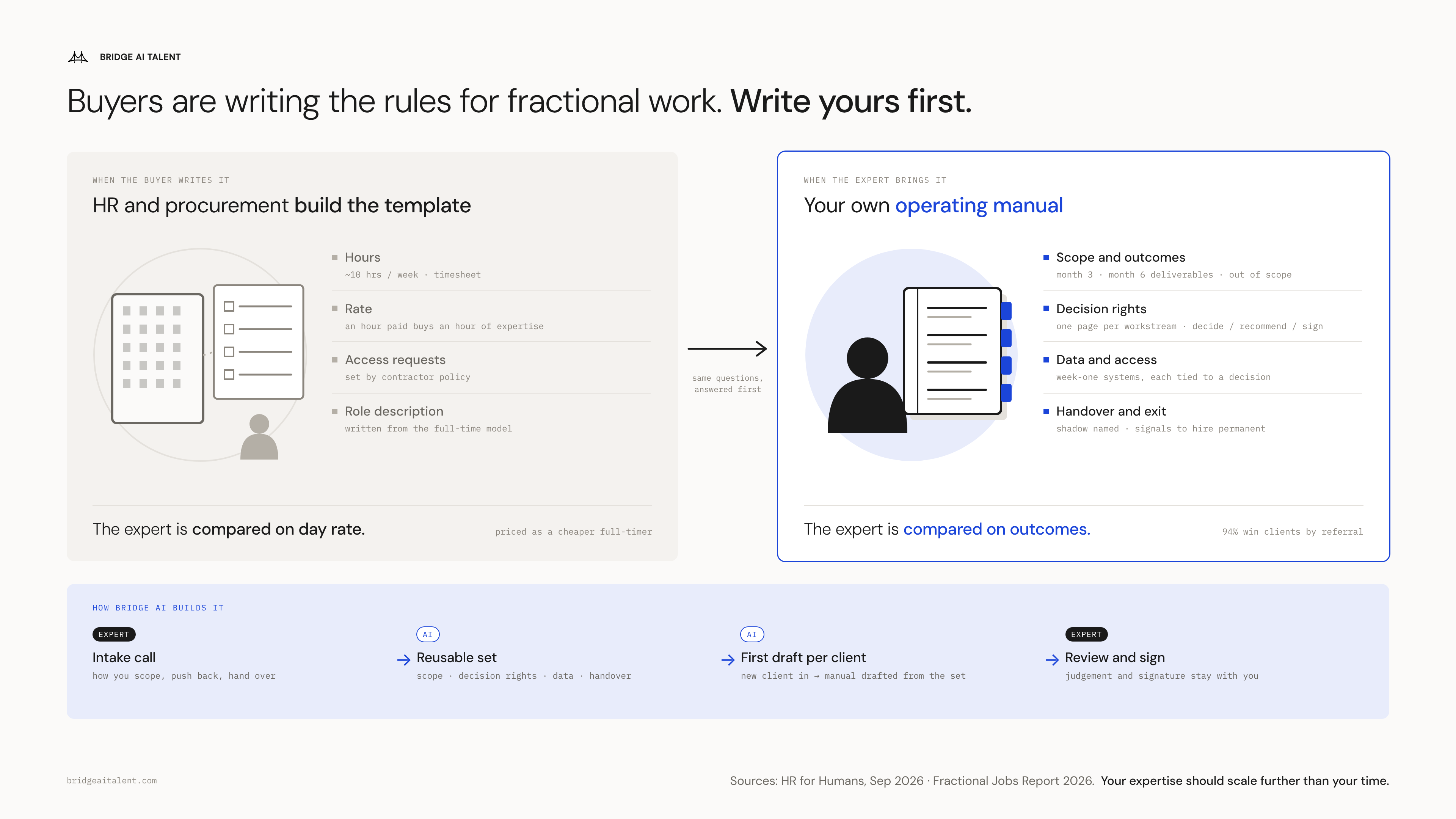
Fractional Leaders: Write Your Operating Manual Before Buyers Do
As companies formalize how they hire and manage fractional leaders, buyers are increasingly defining the terms of engagement. This article explains why fractional executives must proactively create their own operating manual to control scope, define outcomes, and secure better mandates, rather than letting clients dictate the rules.
Read article
Your client is Fact-Checking your referral with ChatGPT
AI tools are changing how B2B buyers vet referrals, with 62% using AI to fact-check sales claims. This article explains how fractional executives can ensure their public record stands up to AI scrutiny, protecting their reputation and securing mandates in an evolving market.
Read article
AI makes fractional operators more productive. Day rates make them poorer.
A fractional CFO runs cash flow monitoring for a client, eight days a month at $1,500 a day. She brings AI into the work. The bank feeds are automated, the system handles most of the transaction coding, and the weekly forecast refreshes without hours of manual work. The mandate drops from eight days a month to six. The same work now takes a quarter less of her time. Over a six-month mandate, she loses $18,000 in revenue. The big consulting firms have the same problem, and they have started to price around it. About 25% of McKinsey's global fees are now tied to outcomes, according to its UK managing partner, Michael Birshan. Clients increasingly arrive with a result they want and ask McKinsey
Read article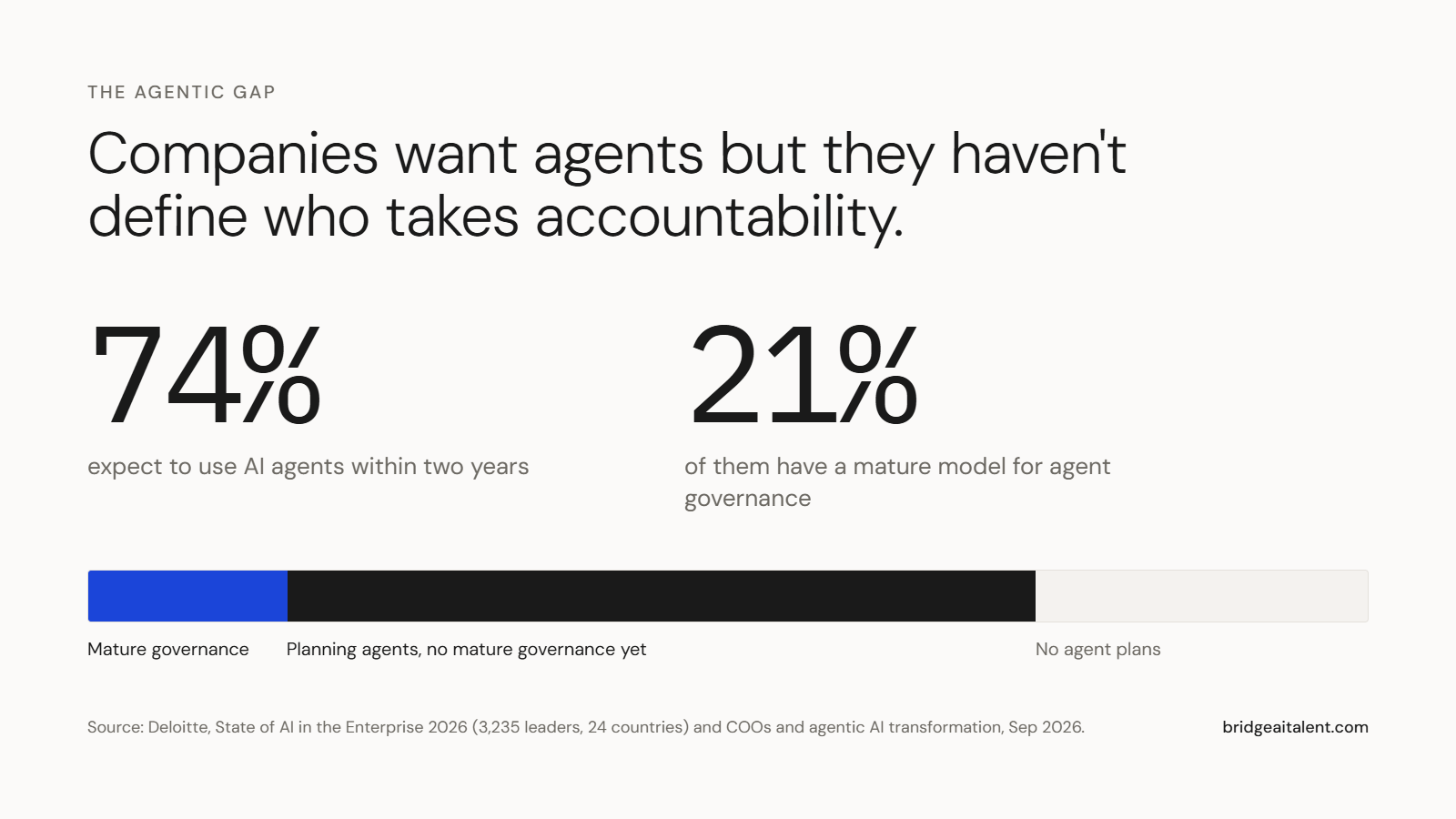
The Agentic Gap
The 'agentic gap' describes the challenge companies face in assigning accountability for AI agents, with only 21% having mature governance despite 75% planning deployment. Fractional COOs, CHROs, and transformation leaders bridge this gap by implementing effective AI governance and ensuring accountability for AI-driven outcomes.
Read article
When the Agent Hires You
Eighty percent of people using AI at work say it makes them personally more productive. Thirty-seven percent of companies can point to any EBIT impact from it. Those two numbers come from the same survey: McKinsey's State of AI 2026, fielded in May and June across 1,719 respondents in 97 countries. The 37% figure is flat against 2025. Around 6% of firms qualify as high performers. So a year of better tools, and the share of companies that can book a result did not move.
Read article
The Builder Premium
Interim COO requests grew 250% year on year. Interim CMO requests doubled. Interim CFO requests grew 14%. Those three numbers come from the same table in Heidrick & Struggles' 2026 High-End Independent Talent Report, and they tell a different story from the one most fractional executive repeat at dinner. The fractional market still talks about itself as a CFO market. The growth is somewhere else.
Read article
The 5 Steps to Launch Your Fractional Business
Most people go fractional the same way. They leave a full-time role, change the LinkedIn title to "Fractional CFO", tell their network they are available, and land two clients through friends. Around month six the two clients want more days. The pipeline is empty because filling it took time nobody had. The business is a job again, with three bosses instead of one. Nobody failed. The model was never designed
Read article
What employers asked for after they hired their first fractional
Adoption of independent talent is settled. What employers want now is proof of method, and that is the thing a bespoke one-person practice structurally cannot produce.
Read article
Move up a Level
We were the one doing the work, we should now architect how the work gets done !
Read article